
Key Takeaways:
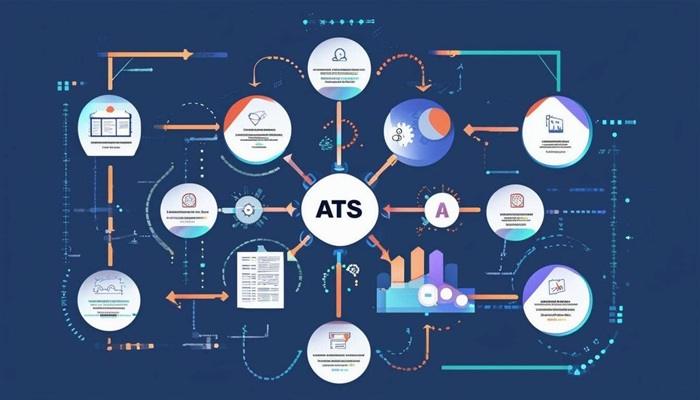
- Applicant Tracking Systems (ATS) streamline the hiring process by automating tasks such as resume parsing and candidate screening.
- The integration of Artificial Intelligence (AI) in ATS enhances efficiency and accuracy in the recruitment process.
- Mobile-friendly interfaces in ATS platforms improve accessibility for both recruiters and candidates.
- Data-driven decision-making through ATS provides valuable insights into recruitment metrics and candidate suitability.
Table of Contents
- The Role of Applicant Tracking Systems in Recruitment
- Integration of Artificial Intelligence in ATS
- Benefits of Using ATS in Recruitment
- Challenges and Considerations
- Future Trends in Applicant Tracking Systems
- Conclusion
The Role of Applicant Tracking Systems in Recruitment
The evolution of recruitment technologies has dramatically altered how organizations attract top talent. At the center of this transformation are Applicant Tracking Systems (ATS), enabling employers to streamline hiring workflows while minimizing manual processes. From simplifying resume management to automating interview scheduling, ATS applicant platforms have become the industry standard for companies aiming to stay competitive in a crowded job market.
Applicant Tracking Systems make it easier to sift through large volumes of applications efficiently, ensuring no candidate falls through the cracks. They also support recruiters by automating repetitive tasks and centralizing candidate data, which enhances internal collaboration and communication. With these systems, hiring managers can focus more on strategy and less on paperwork, leading to a more dynamic and engaged recruitment process.
Today’s job market moves at a fast pace, requiring companies to act swiftly and decisively. ATS platforms provide structure and transparency, enabling organizations to measure the effectiveness of their recruitment campaigns in real-time. As digital-first hiring practices become the norm, the importance of ATS in maintaining both scalable and compliant hiring processes continues to grow.
ATS systems can also improve compliance with local and global hiring laws, providing a safeguard against regulatory risks. By systematically recording every step in the process, these platforms help companies create detailed audit trails and report on diversity, equity, and inclusion metrics—key components in fostering fair and unbiased hiring practices.
Integration of Artificial Intelligence in ATS
The integration of Artificial Intelligence has taken ATS capabilities to new heights. With AI-driven analytics and algorithms, recruiters can instantaneously identify top candidates by matching experience, skills, and potential fit with job descriptions. AI tools can assess thousands of applications in seconds, freeing HR departments to dedicate more time to candidate engagement and less to manual screening. This not only expedites the entire recruitment process but also reduces the risk of overlooking high-potential talent due to human bias or fatigue.
Advanced AI-powered ATS platforms also learn from past hiring decisions—improving their predictive accuracy over time. They can match people with roles more effectively by analyzing historical hiring data, interview feedback, and employee performance outcomes. According to SHRM, AI in recruiting enhances time-to-hire and quality-of-hire metrics, enabling organizations to build better teams with a data-informed approach.
Benefits of Using ATS in Recruitment
- Efficiency: Modern ATS platforms automate key administrative tasks, including autoresponders for job applications, interview scheduling, and document management. As a result, recruiters can manage more requisitions simultaneously while dedicating their expertise to evaluating final candidates.
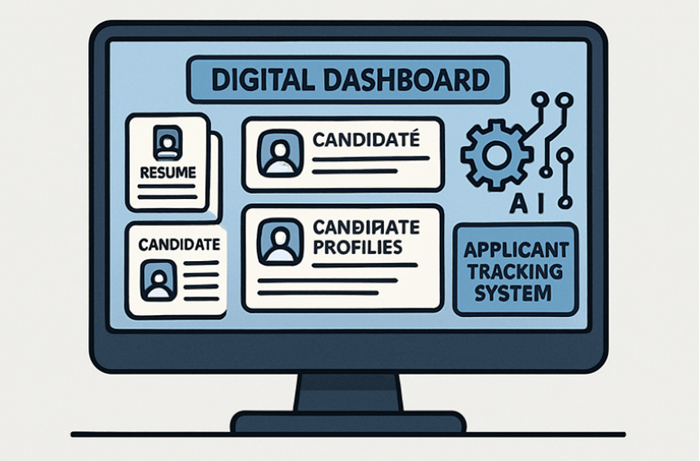
- Data-Driven Decision Making: An ATS provides comprehensive dashboards and reports, enabling hiring teams to track recruitment funnel performance, identify bottlenecks, and refine sourcing strategies. Metrics on candidate quality, source channel effectiveness, and recruiter productivity would enable organizations to refine their approaches in real time.
- Enhanced Candidate Experience: Consistent, automated communication keeps candidates informed throughout every stage of the process. Features such as easy-to-use application forms, self-scheduling of interviews, and status updates contribute to a positive and transparent candidate journey from start to finish.
Notably, a well-designed ATS can lead to higher candidate satisfaction scores, which are crucial for employer branding. Research from Recruiter.com shows that streamlined communication and process transparency improve the candidate experience and employer reputation.
Challenges and Considerations
Despite the many advantages of ATS platforms, they come with their own set of challenges. One of the most prominent concerns is the risk of highly qualified candidates being overlooked due to keyword-centric filtering. Unless an applicant tailors their resume to include the specific terminology an ATS scans for, they might be inadvertently filtered out. Conversely, applicants who load their resumes with keywords—regardless of relevance or actual expertise—can sometimes unfairly pass through the initial screening.
These challenges underscore the importance of ongoing system calibration and recruiter oversight. By regularly fine-tuning the algorithms that drive candidate screening, organizations can mitigate the impact of keyword bias while still capitalizing on the speed and scalability that ATS offers. It’s also critical to train recruitment teams to review candidate pools with a discerning eye, ensuring the best talent doesn’t slip by unnoticed.
Future Trends in Applicant Tracking Systems
AI-Driven Personalization
The future of ATS lies in sophisticated personalization features powered by advanced machine learning. These systems will enable hyper-personalized candidate journeys, such as custom job recommendations, automated outreach messages tailored to each applicant, and dynamic interview scheduling based on both candidate and recruiter availability.
Seamless Integration with HR Technologies
Modern organizations increasingly demand seamless integration between ATS platforms and other HR technologies, such as onboarding, performance management, and learning systems. The next generation of ATS will serve as a unified hub for end-to-end talent management, fostering a connected experience that extends well beyond initial hiring.
Enhanced Mobile Optimization
As workforces shift toward remote and flexible arrangements, mobile-first recruitment tools are no longer optional—they are essential. The most successful ATS platforms will prioritize intuitive mobile interfaces, enabling candidates and recruiters to interact with the hiring process at any time and from anywhere. Forbes highlights how mobile optimization in recruitment solutions can significantly improve hiring speed and candidate convenience.
Conclusion
Applicant Tracking Systems have fundamentally transformed talent acquisition, driving new levels of efficiency, transparency, and strategic insight across the hiring process. By recognizing both the strengths and limitations of ATS technology and investing in ongoing innovation, organizations can position themselves to secure the best talent in an increasingly digital and data-driven world. As the recruitment landscape continues to evolve, companies that adopt cutting-edge ATS solutions will have a distinct advantage in building high-performing, future-ready teams.